

There is something especially comforting about the smell of warm cinnamon rolls baking in the kitchen. These Apple ‘Cider Bath’ Cinnamon Rolls combine soft homemade dough with apple butter, cinnamon, brown sugar, and optional walnuts, then add an extra layer of flavor with an apple cider and cream bath. The result is a tender, flavorful cinnamon roll with a cozy fall-inspired taste.
If you enjoy seasonal baking but are also looking for more mindful Diabetic Recipes, this recipe can be adapted with a few thoughtful ingredient choices. The original version contains several sources of added sugar, so it is not automatically diabetes-friendly. However, using unsweetened apple butter, reducing added sugar, limiting the icing, and practicing portion control can make it easier to enjoy as an occasional treat.
Why You’ll Love This Recipe
These Apple ‘Cider Bath’ Cinnamon Rolls are perfect for anyone who loves classic homemade cinnamon rolls with a seasonal twist. Apple butter adds concentrated apple flavor to the filling, while cinnamon brings warmth and aroma. Optional walnuts add a pleasant crunch and complement the soft, sweet dough beautifully.
Another reason to love this recipe is its make-ahead method. The dough can be prepared and refrigerated overnight, which makes the recipe much easier to manage for a weekend breakfast or brunch. If you’re collecting Diabetic meal ideas, you can also adapt the recipe by reducing the added sugars and serving a smaller portion alongside a balanced breakfast.
Health Benefits of This Recipe
The ingredients in these cinnamon rolls can provide different nutritional qualities, although the traditional recipe is still a sweet baked good and should be enjoyed mindfully. Walnuts, when included, provide unsaturated fats and some protein, while cinnamon adds plenty of flavor without needing additional sweetener. Choosing unsweetened apple butter can also help reduce unnecessary added sugar.
For people interested in Diabetes-friendly recipes, it’s important to consider the complete recipe rather than focusing on one ingredient. The original dough contains refined flour and sugar, while the filling and icing add additional carbohydrates and sweetness. A diabetes-conscious variation can use unsweetened apple butter, less sugar, a suitable baking sweetener, and a lighter amount of icing. Portion size and what you serve alongside the cinnamon roll also matter.
What Makes This Recipe Diabetic
The original Apple ‘Cider Bath’ Cinnamon Rolls should not be considered a diabetic recipe as written because they contain white sugar, brown sugar, powdered sugar, apple butter, apple cider, and all-purpose flour. These ingredients can contribute a substantial amount of carbohydrates and added sugar.
To make the recipe more suitable for a diabetes-conscious eating pattern, you can make several practical adjustments. Choose unsweetened apple butter, reduce the sugar in the filling, use an appropriate baking sweetener if desired, and drizzle only a small amount of icing over the finished rolls. Serving a smaller portion alongside foods containing protein and fiber can also help create a more balanced meal.
Tips & Variations
For the best cinnamon rolls, avoid adding too much extra flour to the dough. The dough is naturally sticky at first, and using wet hands during the stretch-and-fold process makes it easier to handle. Allowing the dough enough time to rise is also important for achieving a soft and airy texture.
You can easily customize these rolls according to your preferences. Leave out the walnuts if you prefer a smooth filling, or replace them with finely chopped pecans. For a lower-sugar variation, use unsweetened apple butter and reduce the brown and white sugar. You can also use less icing or skip it completely if you prefer the apple and cinnamon flavors to stand out.
How to Store & Meal Prep
Once baked, allow the cinnamon rolls to cool before placing them in an airtight container. They can be stored in the refrigerator and gently reheated when you’re ready to serve them. Warming the rolls briefly helps restore their soft texture and brings out the apple and cinnamon aroma.
These rolls are also convenient for meal prep because the dough can be refrigerated overnight before shaping and baking. If you want to store baked rolls longer, freeze them individually in airtight wrapping or freezer-safe containers. For a diabetes-conscious approach, consider freezing individual portions so you can thaw and enjoy one roll at a time rather than having several available at once.
Common Mistakes to Avoid
One common mistake is using milk that is too hot when activating the yeast. The milk should be warm rather than extremely hot. Another mistake is adding too much flour when the dough feels sticky. Extra flour can make the finished rolls dense instead of soft and tender, so use wet hands and allow the dough to develop structure through the stretch-and-fold process.
It’s also easy to overfill the dough or add too much icing. An excessive amount of filling can make the rolls difficult to shape, while a heavy layer of icing increases the sweetness significantly. For a more diabetes-conscious version, keep the filling balanced, use unsweetened apple butter when possible, and apply the icing lightly.
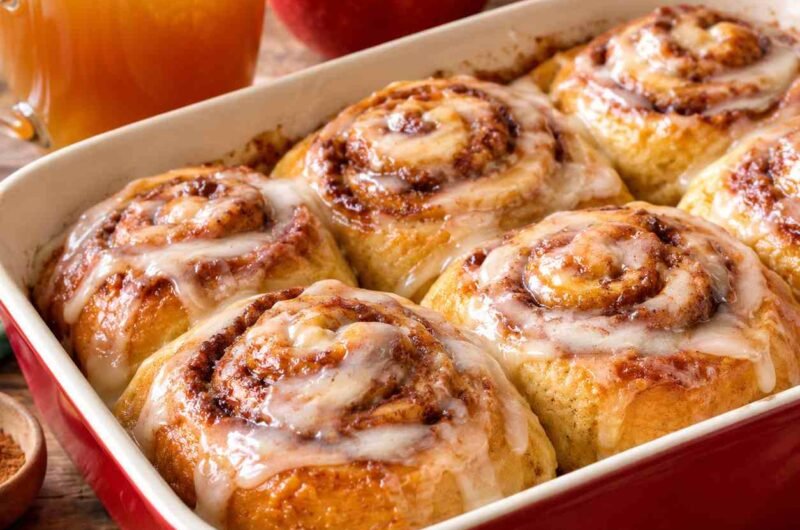
Apple ‘Cider Bath’ Cinnamon Rolls
Course: DinnerCuisine: AmericanDifficulty: Easy12
servings55
minutes40
minutes488
kcal540
180
20 mins
11
hoursEnjoy soft Apple ‘Cider Bath’ Cinnamon Rolls with apple butter, cinnamon, walnuts, and a rich apple cider cream bath. Get diabetes-conscious swaps, serving tips, and meal-prep ideas.
Ingredients
Dough:
1 cup plus 2 tablespoons warm milk (90 degrees F/32 degrees C)
2 1/4 teaspoons active dry yeast
1/3 cup white sugar
6 tablespoons unsalted butter, melted
1 large egg, beaten
3/4 teaspoon fine salt
4 1/4 cups all purpose flour
Filling:
4 tablespoons soft butter
1/3 cup apple butter
1/3 cup brown sugar
1/3 cup white sugar
2 tablespoons cinnamon
1/2 cup chopped walnuts (optional)
Bath:
4 cups apple cider
2/3 cup cream
Icing:
1/4 cup reduced apple cider
2 cups powdered sugar
Instructions
- Pour warm milk into a small bowl and sprinkle yeast on top. Allow to sit for 10 minutes. Add sugar, melted butter, egg, and salt. Whisk to combine. Add flour and stir with a wooden spoon handle until everything is well combined and a sticky dough forms. Cover and let sit for 20 minutes.
- Wet your hands. Uncover dough and do a set of 6 or 7 “stretch and folds” of the dough with your wet hands, turning the bowl as you go. Wet your hands again and shape the dough into a smooth ball. Cover and let raise until doubled in size, about 1 1/2 hours.
- Transfer dough to a work surface and press out the air. Grab dough from the edge and stretch it over the top to the center. Repeat about 5 times, going all the way around, until the dough comes together. Flip dough over and use your hand and a bench scraper to form the dough into a tight ball using a circular motion on the table. Set dough into an oiled resealable bag and refrigerate overnight.
- The next day transfer cold dough to a floured surface and press flat into a rectangle shape. Dust with flour and roll into a large oval. Dust again and flip dough over. Use you hands to gently stretch the dough to form a rectangle. Continue rolling until you have a rectangle that is approximately 18×12 inches.
- For the filling, combine butter, apple butter, brown sugar, white sugar, and cinnamon in a bowl.
- Spread filling onto the dough, leaving about 1.5 inches of dough bare on the long opposite side. Scatter over walnuts. Roll dough up tightly and carefully without pressing out the filling, finishing with the seam side down. Use your hands to press into a uniform tube. Score into 12 equal portions, trimming a little bit of the dough off each end. Use a string or knife to cut dough roll into 12 rolls. The extra dough can be added to the bottoms of some of the smaller rolls.
- Transfer cinnamon rolls into a buttered 13×9 baking pan or dish. Cover and let proof until the rolls have risen by about 50% and are touching each other, about 1 hour.
- For the bath, pour apple cider into a saucepan and bring to a boil over medium-high heat. Boil until apple cider has reduced by half, about 12 minutes. Ladle out 1/4 cup of reduced apple cider and reserve for the icing. Continue cooking until the cider has reduced to about 1/3 cup and gets syrupy, about 12 more minutes. Turn off heat and stir in cream. Set aside until rolls are fully proofed.
- Once cinnamon rolls are proofed, ladle the cider bath evenly over the rolls, coating as much of the surface as possible.
- Preheat the oven to 350 degrees F (180 degrees C).
- Bake cinnamon rolls in the preheated oven for 30 to 35 minutes. The internal temperature in the center of each roll should read 190 degrees F (88 degrees C). Remove from the oven and allow cinnamon rolls to cool for 10 to 15 minutes while preparing the icing.
- Whisk powdered sugar, 1 cup at a time, into the reserved reduced apple cider until you have a smooth, thick, yet pourable icing. Drizzle icing over the rolls using a whisk. Allow cinnamon rolls to cool until just warm and serve.
Notes
- Regular cinnamon roll filling uses 8 tablespoons of butter, so if you don’t have apple butter, use an entire stick of butter for the filling.
Nutrition Facts (per serving)
| Nutrient | Amount |
|---|---|
| Calories | 488 |
| Fat | 15g |
| Carbs | 83g |
| Protein | 6g |
These Apple ‘Cider Bath’ Cinnamon Rolls are a delicious way to enjoy the comforting flavors of apples and cinnamon in a homemade breakfast or brunch treat. The combination of apple butter, warm cinnamon, walnuts, and apple cider creates a rich seasonal flavor, while the overnight dough method makes preparation easier.
If you’re searching for Diabetic Recipes, remember that the original recipe is not naturally low in sugar. However, thoughtful swaps such as unsweetened apple butter, reduced added sugar, less icing, and controlled portions can make it easier to fit this seasonal favorite into a diabetes-conscious eating plan.
Save this recipe for a cozy fall morning, prepare the dough ahead of time, and enjoy a warm cinnamon roll with a balanced breakfast. With a few simple adjustments, you can enjoy comforting seasonal flavors while keeping your meal-planning goals in mind.