
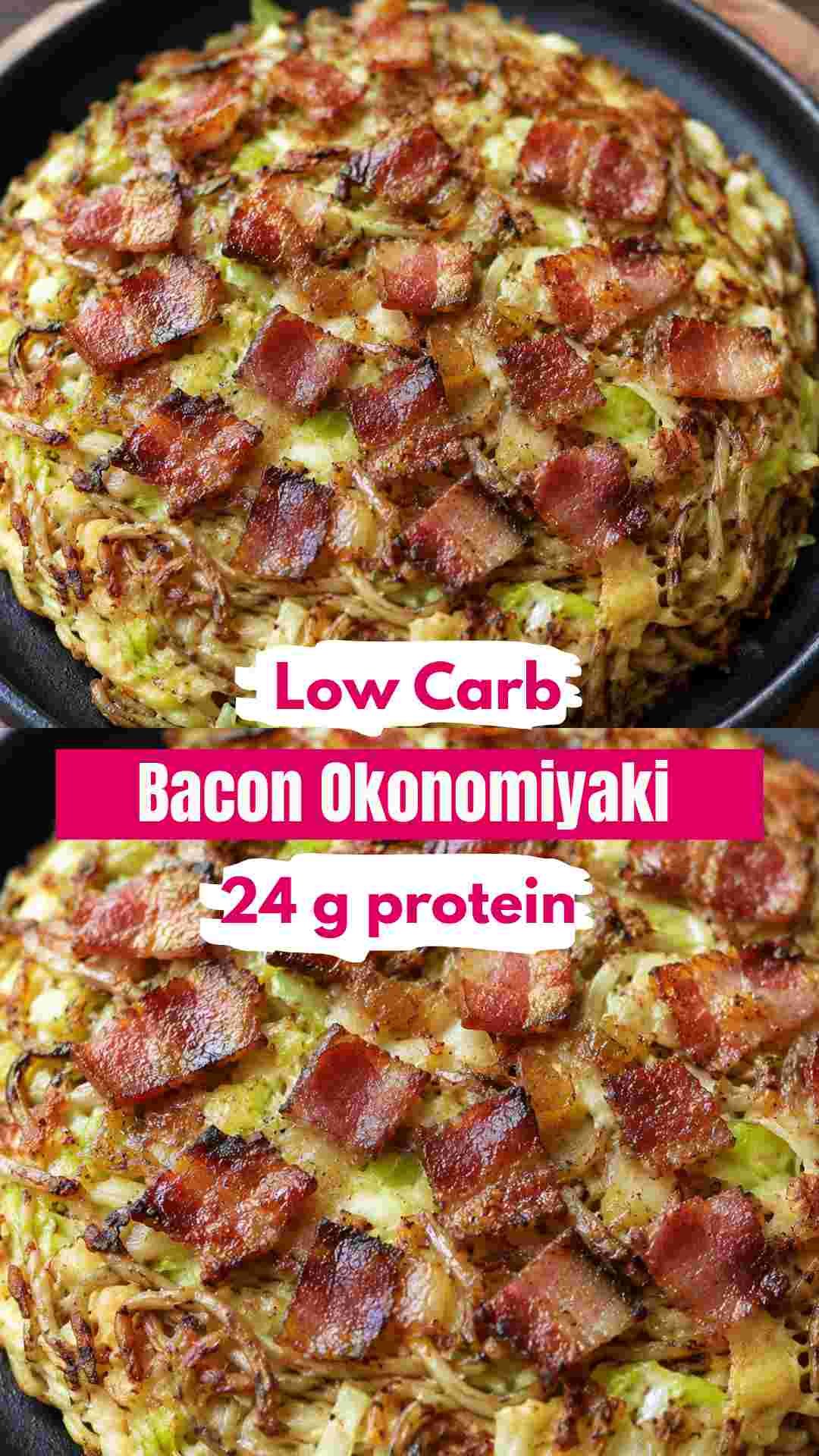
Bacon Okonomiyaki is a flavorful Japanese-inspired savory pancake made with eggs, cabbage, onion, soba noodles, and crispy bacon. It is hearty, comforting, and packed with savory flavors, making it a fun choice when you want something different from your usual meal routine.
For those looking for diabetic meal ideas, this recipe can be enjoyed with thoughtful portion control and a few simple ingredient adjustments. The cabbage and eggs add valuable nutrients, while reducing refined flour, noodles, and salty toppings can make the meal easier to fit into a balanced diabetes-conscious eating plan.
Why You’ll Love This Recipe
Bacon Okonomiyaki is an easy and satisfying recipe that combines crispy edges with a tender, flavorful center. The combination of cabbage, onion, eggs, soba noodles, and bacon creates layers of texture and flavor in every bite.
You will also love how customizable this recipe is. You can increase the vegetables, reduce the noodles or bacon, choose reduced-sodium soy sauce, and make smaller pancakes for easier portion control. These simple changes make it a practical option for anyone collecting diabetes-friendly recipes and savory meal ideas.
Health Benefits of This Recipe
Cabbage is one of the most nutritious ingredients in this recipe. It provides fiber, vitamin C, vitamin K, and other beneficial nutrients while adding volume to the meal. Increasing the cabbage can make the pancake more vegetable-focused without adding large amounts of carbohydrates.
Eggs provide protein and help make the meal satisfying, while onions contribute flavor and additional plant nutrients. Bacon adds savory flavor and protein but can also be high in sodium and saturated fat, so keeping the portion moderate is a smart choice. Soba noodles and flour provide carbohydrates, making portion size especially important for people managing blood glucose.
What Makes This Recipe Diabetic-Friendly
The original Bacon Okonomiyaki recipe contains flour and soba noodles, so it should not automatically be considered a low-carbohydrate recipe. However, it can be adapted to better suit a diabetes-conscious eating pattern by focusing on vegetables, sensible portions, and balanced ingredients.
Try increasing the cabbage, reducing the amount of flour or noodles, choosing reduced-sodium soy sauce, and limiting sugary sauces or toppings. Serving the pancake with a generous portion of non-starchy vegetables can also create a more balanced meal. If you monitor blood glucose, consider the total carbohydrate content of your serving and follow your individual nutrition plan.
Tips and Variations
For a more vegetable-rich version, add extra shredded cabbage or include vegetables such as mushrooms, green onions, spinach, or bell peppers. These additions can provide more texture and flavor while helping reduce the proportion of noodles and flour in each serving.
You can also make smaller pancakes for easier portion control and simpler flipping. If sodium is a concern, reduce the added salt and use a reduced-sodium soy sauce. For a lighter version, use less bacon while still keeping enough to provide its smoky, savory flavor.
How to Store and Meal Prep
Cooked Bacon Okonomiyaki can be cooled and stored in an airtight container in the refrigerator for a convenient make-ahead meal. Individual portions are especially useful for meal prep because you can take out only the amount you plan to eat.
For longer storage, wrap individual pancakes and place them in a freezer-safe container or bag. Reheat refrigerated or frozen portions thoroughly before serving. A skillet or air fryer can help restore the crispy edges, while a microwave offers a quicker option but may produce a softer texture.
Common Mistakes to Avoid
One common mistake is cooking the pancakes over excessively high heat. This can cause the bacon and outside of the pancake to brown too quickly while leaving the center undercooked. Use moderate heat and give the pancake enough time to cook through before flipping.
Another mistake is overlooking the carbohydrate and sodium content of the ingredients. Flour, soba noodles, soy sauce, and bacon all contribute to the nutritional profile of the recipe. Avoid automatically adding sweet sauces, and pay attention to serving size when preparing this dish as part of a diabetes-conscious meal.
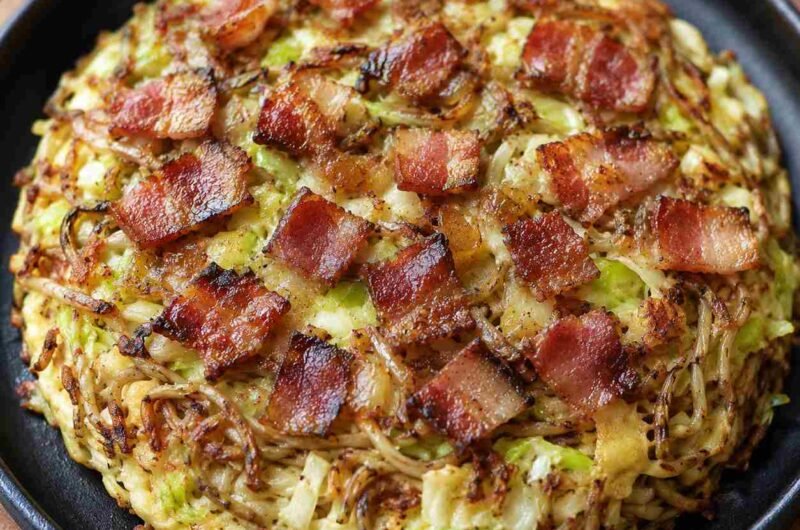
Bacon Okonomiyaki
Course: BreakfastCuisine: AmericanDifficulty: Easy4
servings10
minutes50
minutes531
kcal1
hourEnjoy a flavorful Bacon Okonomiyaki with cabbage, eggs, soba noodles, and bacon. Get practical diabetes-friendly tips, swaps, storage ideas, and meal-prep guidance.
Ingredients
4 eggs
½ cup water
½ cup all-purpose flour
2 teaspoons soy sauce
1 teaspoon baking powder
1 teaspoon salt
3 tablespoons vegetable oil
1 onion, diced
2 cups shredded cabbage
1 (8 ounce) package dried soba noodles
1 (8 ounce) package bacon, chopped
Instructions
- Whisk eggs, water, flour, soy sauce, baking powder, and salt together in a bowl; set batter aside.
- Heat oil in a sauté pan over medium heat. Add onion; cook until soft and translucent, about 5 minutes. Stir onion into batter. Add cabbage to the same pan; cook until slightly wilted, 5 to 7 minutes. Stir cabbage into batter.
- Fill a large pot with water and bring to a boil. Cook soba noodles in boiling water, stirring occasionally, until tender yet firm to the bite, 5 to 7 minutes. Drain and cut noodles into shorter pieces; stir into batter.
- Cook ¼ cup bacon in a skillet over medium-high heat until starting to crisp, 2 to 3 minutes; arrange in a small circle in middle of the skillet. Add 1 cup batter to the skillet on top bacon; cook until brown and crispy, flipping pancake halfway and pressing down with a spatula, about 5 minutes per side. Repeat with remaining bacon and batter.
Nutrition Facts (per serving)
| Nutrient | Amount |
|---|---|
| Calories | 531 kcal |
| Total Fat | 24 g |
| Total Carbohydrates | 60 g |
| Protein | 24 g |
Bacon Okonomiyaki is a delicious and creative way to enjoy cabbage, eggs, soba noodles, and bacon in one satisfying savory pancake. Its crispy exterior and tender vegetable-filled center make it a comforting meal that can easily bring variety to your recipe collection.
For anyone searching for diabetic meal ideas and diabetes-friendly recipes, thoughtful modifications can make this dish easier to fit into a balanced eating pattern. Increase the vegetables, control the noodles and flour, watch portions, and choose toppings carefully for a flavorful meal you can enjoy with confidence.